
1. OOP Concepts
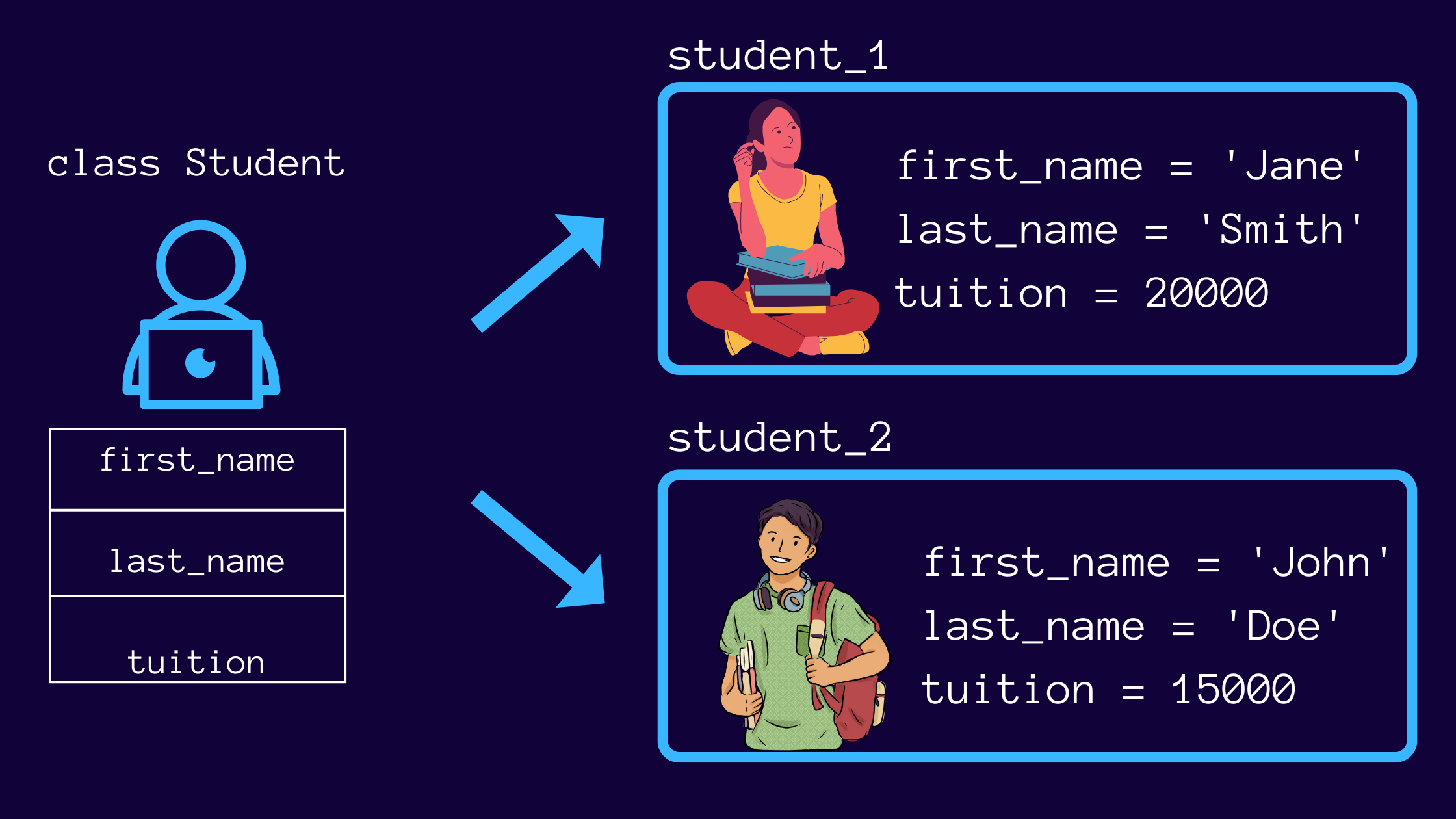
Classes are blueprints, objects are instances
Class
A blueprint for creating objects
class Dog:
    pass
Object
An instance of a class
my_dog = Dog()Attribute
Data associated with an object
my_dog.name = "Rover"Method
Function associated with an object
def bark(self):
    print("Woof!")
2. Defining Classes
Basic Class Structure
class Car:
    # Class attribute (shared by all instances)
    wheels = 4

    # Constructor (initialize instance attributes)
    def __init__(self, brand, model):
        self.brand = brand  # Instance attribute
        self.model = model

    # Instance method
    def description(self):
        return f"{self.brand} {self.model}"

# Create objects
my_car = Car("Toyota", "Corolla")
print(my_car.description())  # Toyota Corolla
Exercise 1: Create a Book Class
Create a Book class with:
- Attributes:
title,author,pages - Method
info()that returns a description - Create an instance and call the method
3. Inheritance
Base (Parent) Class
class Animal:
    def __init__(self, name):
        self.name = name

    def speak(self):
        raise NotImplementedError("Subclass must implement")
Derived (Child) Class
class Dog(Animal):
    def speak(self):
        return f"{self.name} says Woof!"

class Cat(Animal):
    def speak(self):
        return f"{self.name} says Meow!"
Usage
dog = Dog("Buddy")
cat = Cat("Whiskers")
print(dog.speak())  # Buddy says Woof!
print(cat.speak())  # Whiskers says Meow!
Exercise 2: Shape Inheritance
Create a base Shape class with:
- Method
area()that raisesNotImplementedError - Derived classes
RectangleandCircle - Implement
area()in each subclass
4. Encapsulation
Private Attributes (Name Mangling)
class BankAccount:
    def __init__(self, balance):
        self.__balance = balance  # Private attribute

    def deposit(self, amount):
        self.__balance += amount

    def get_balance(self):
        return self.__balance

account = BankAccount(1000)
account.deposit(500)
print(account.get_balance())  # 1500
# account.__balance  # Error: AttributeError
Python doesn't have truly private attributes, but name mangling (__attribute) makes them harder to access accidentally.
5. Polymorphism
class Dog:
    def speak(self):
        return "Woof!"

class Cat:
    def speak(self):
        return "Meow!"

def animal_sound(animal):
    print(animal.speak())

dog = Dog()
cat = Cat()

animal_sound(dog)  # Woof!
animal_sound(cat)  # Meow!
Exercise 3: Polymorphic Payment
Create payment classes that demonstrate polymorphism:
- Base class
Paymentwithprocess()method - Subclasses
CreditCard,PayPal,BankTransfer - Each implements
process()differently