
1. What is an Exception?
Definition: An exception is an error that occurs during program execution, disrupting normal flow.
Exceptions are raised when Python encounters unexpected situations.
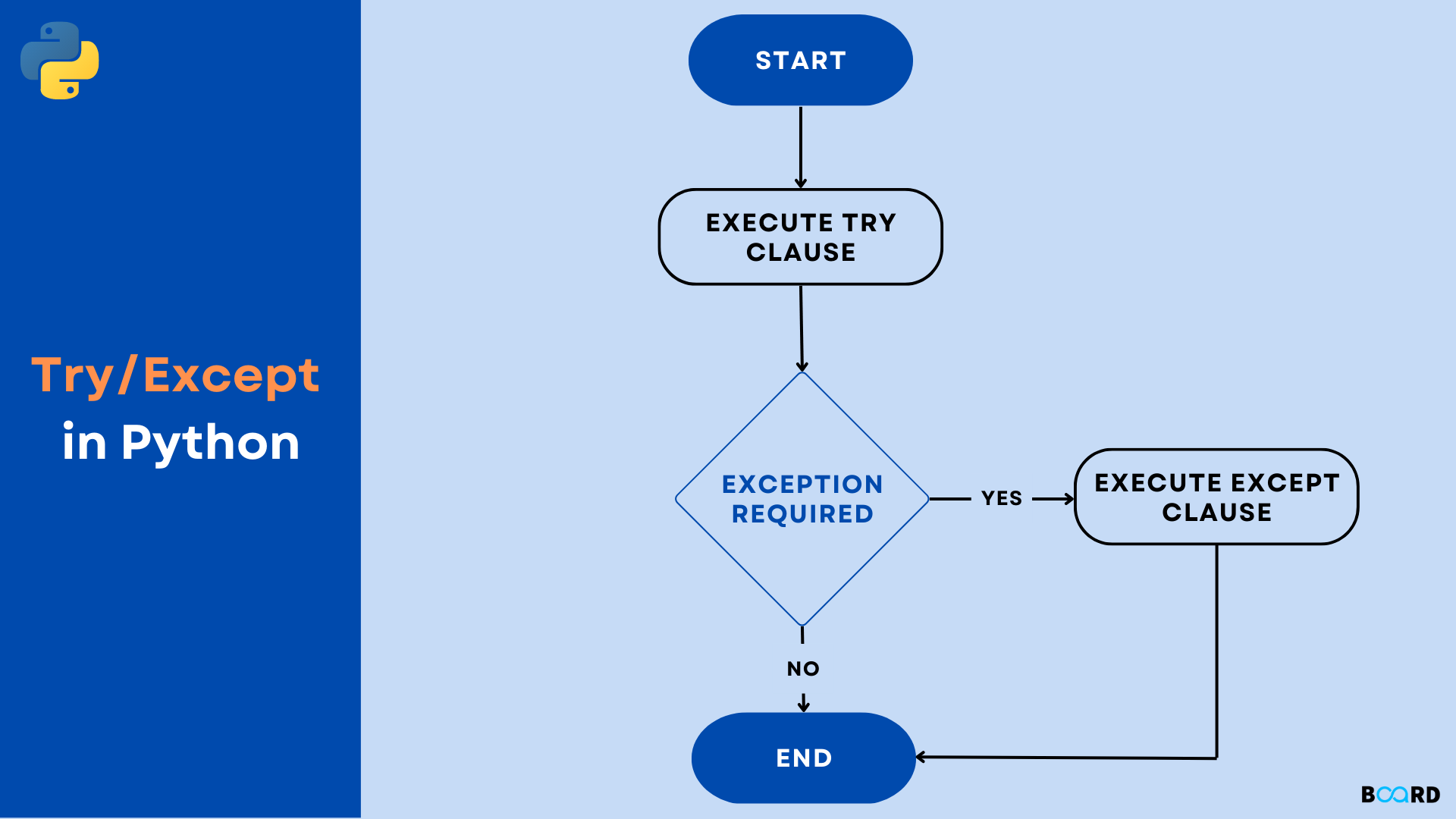
Exception handling workflow
2. Common Exceptions
ZeroDivisionError
Division by zero
5 / 0FileNotFoundError
Missing file
open("nonexistent.txt")ValueError
Invalid conversion
int("abc")IndexError
Invalid list index
lst = [1, 2]
lst[3]
KeyError
Missing dictionary key
d = {"a": 1}
d["b"]
TypeError
Operation on wrong type
"5" + 3Exercise 1: Exception Identification
What exceptions will these raise?
10 / "two"[1, 2, 3][5]int("12.5")
3. Handling Exceptions
Basic try-except Block
try:
    # Risky code
    result = 10 / 0
except ZeroDivisionError:
    print("Cannot divide by zero!")
Always catch specific exceptions rather than using bare except:
Handling Multiple Exceptions
Separate Blocks
try:
    file = open("data.txt")
    num = int(file.read())
except FileNotFoundError:
    print("File missing")
except ValueError:
    print("Invalid number")
Single Block
try:
    # Risky code
except (TypeError, ValueError) as e:
    print(f"Error: {e}")
Exercise 2: Safe Division
Create a function that:
- Takes two numbers as input
- Returns their division
- Handles division by zero and type errors
4. Advanced Exception Handling
else and finally Clauses
try:
    result = 10 / 2
except ZeroDivisionError:
    print("Division failed")
else:
    print(f"Result: {result}")  # Runs if no error
finally:
    print("Execution complete")  # Always runs
finally is ideal for cleanup code (like closing files) that must run regardless of errors.
Raising Exceptions
def validate_age(age):
    if age < 0:
        raise ValueError("Age cannot be negative")
    return True

try:
    validate_age(-5)
except ValueError as e:
    print(f"Error: {e}")
Exercise 3: Password Validator
Create a function that:
- Takes a password string
- Raises
ValueErrorif length < 8 - Returns True if valid
5. Debugging Techniques
Using assert
def calculate_average(numbers):
    assert len(numbers) > 0, "List cannot be empty"
    return sum(numbers) / len(numbers)
Logging Exceptions
import logging

logging.basicConfig(filename='errors.log', level=logging.ERROR)

try:
    10 / 0
except ZeroDivisionError as e:
    logging.error(f"Division error: {e}")
Use logging for production code instead of print() statements.