
1. Function Fundamentals
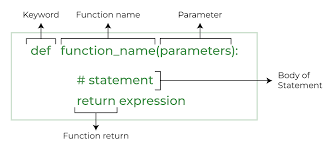
Anatomy of a Python function
Defining and Calling Functions
# Function definition
def greet(name):
    """Returns a greeting message"""
    return f"Hello, {name}!"

# Function call
message = greet("Alice")
print(message)  # Output: Hello, Alice!
Exercise 1: Temperature Converter
Create a function that:
- Converts Fahrenheit to Celsius
- Formula: C = (F - 32) × 5/9
- Test with 68°F (should return 20°C)
2. Parameters & Arguments
| Type | Description | Example |
|---|---|---|
| Positional | Matched by position | func(1, 2) |
| Keyword | Matched by name | func(a=1, b=2) |
| Default | Optional parameters | def func(a=0) |
Example: Flexible Arguments
def describe_pet(pet_name, animal_type="dog"):
    print(f"I have a {animal_type} named {pet_name}")

# Different calling styles
describe_pet("Rover")
describe_pet("Fluffy", "cat")
describe_pet(animal_type="hamster", pet_name="Harry")
Output
I have a dog named Rover
I have a cat named Fluffy
I have a hamster named Harry
3. Return Values
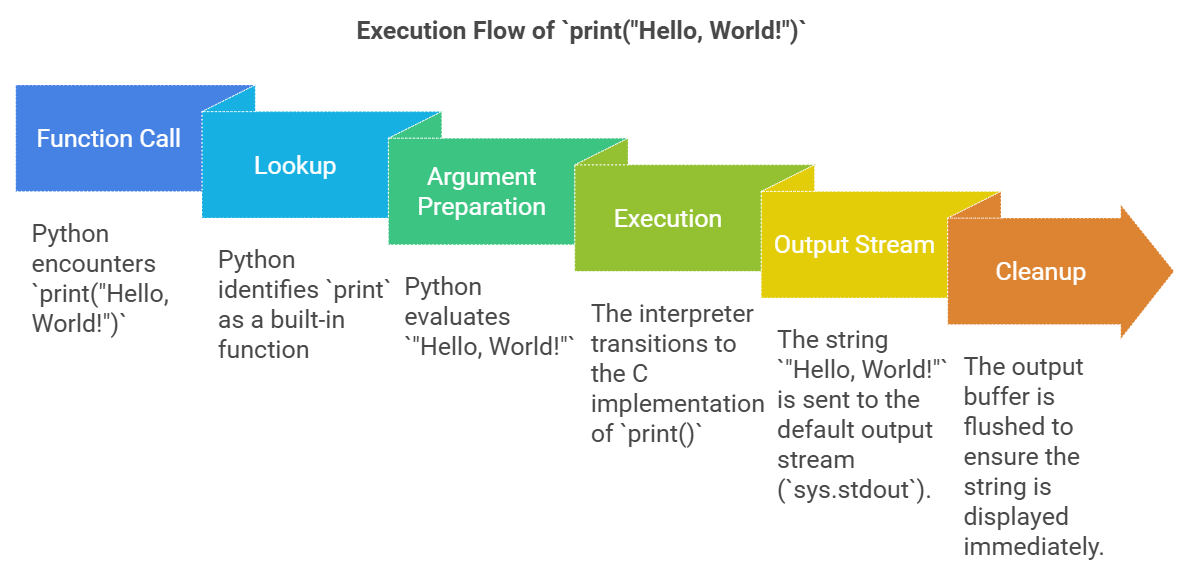
How data flows through functions
def calculate_stats(numbers):
    """Returns tuple of (min, max, avg)"""
    return min(numbers), max(numbers), sum(numbers)/len(numbers)

stats = calculate_stats([10, 20, 30])
print(stats)  # (10, 30, 20.0)
Exercise 2: Password Validator
Create a function that:
- Takes a password string
- Returns True if length ≥ 8 and contains a digit
- Returns False otherwise
4. Variable Scope
Global vs Local
count = 10  # Global variable

def increment():
    count = 5  # Local variable
    return count + 1

print(increment())  # 6
print(count)        # 10 (global unchanged)
Using global
total = 0

def add_to_total(n):
    global total
    total += n

add_to_total(5)
print(total)  # 5